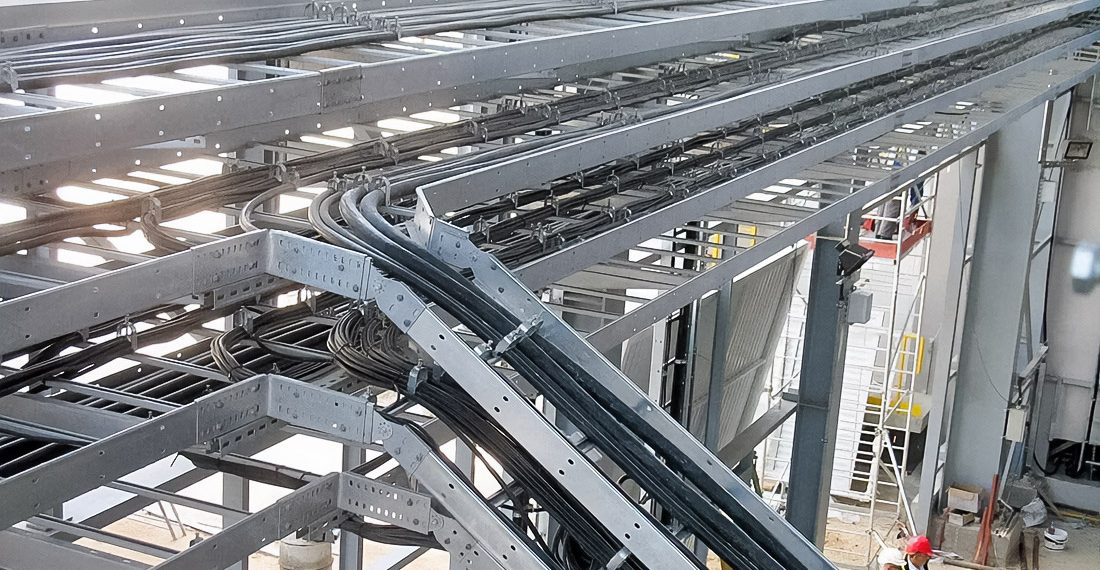
The climate of the UAE coast places strict requirements on engineering systems. It combines high temperature, humidity, aggressive salt mist and abrasive dust. All this accelerates the destruction of metal, makes weak coatings vulnerable and forces designers to choose materials as consciously as possible. A mistake in choosing a cable tray can result in an accident, downtime, or an expensive replacement.
Materials and Coatings
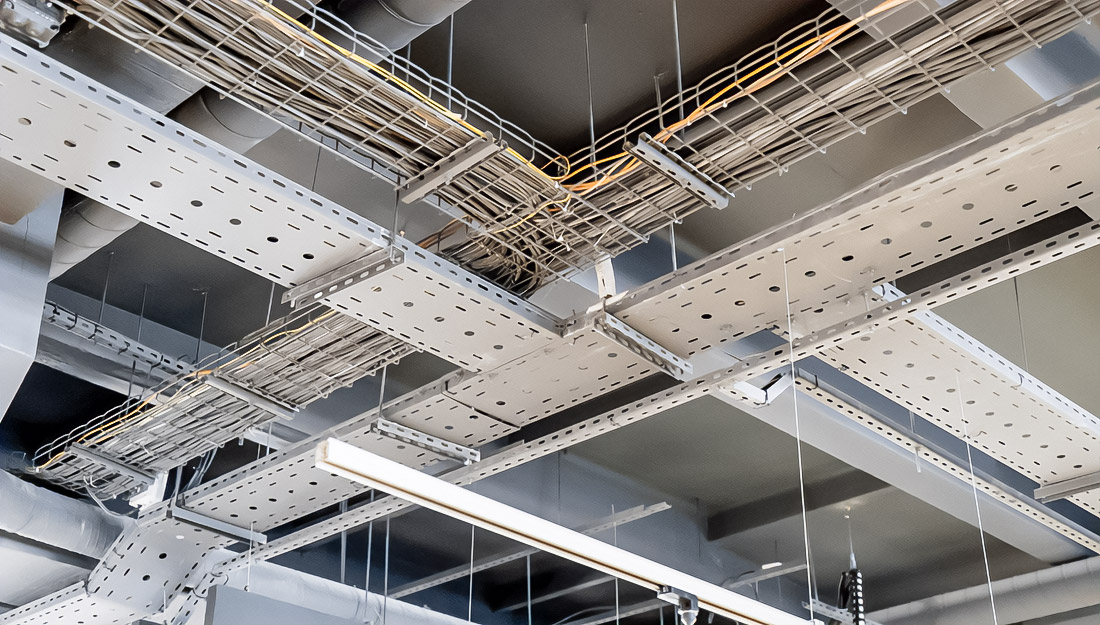
Engineers have several solutions in their arsenal. Pre-galvanizing forms a layer of 15–25 micrometers, which protects only from mild corrosion and lasts no more than 5–7 years in the marine environment. Hot-dip galvanizing creates a dense barrier 50–100 microns thick. It forms a Fe-Zn alloy that is resistant to abrasive wear and salt attacks. Practice shows that the service life in the coastal zone exceeds 15–20 years.
Electrolytic galvanizing is economical, but its thin layer of 5–25 micrometers quickly gives up in a humid atmosphere, often rusting after 2–5 years. GI trays with a coating of 25–55 microns are slightly more stable, but their scope of application is dry rooms. The powder coating with a thickness of 60–120 microns gives a bright decorative effect, but a deep scratch triggers corrosion under the plastic layer. Anodizing aluminum creates a protective barrier of 5–25 microns, enhances wear resistance, but in conditions of constant salt mist, it does not guarantee durability. The duplex HDG plus powder coating system provides maximum protection. This option can withstand more than 30 years even on the coast, and modern cable tray manufacturers in UAE increasingly recommend it for long-term projects near the sea.
Standards and Tests
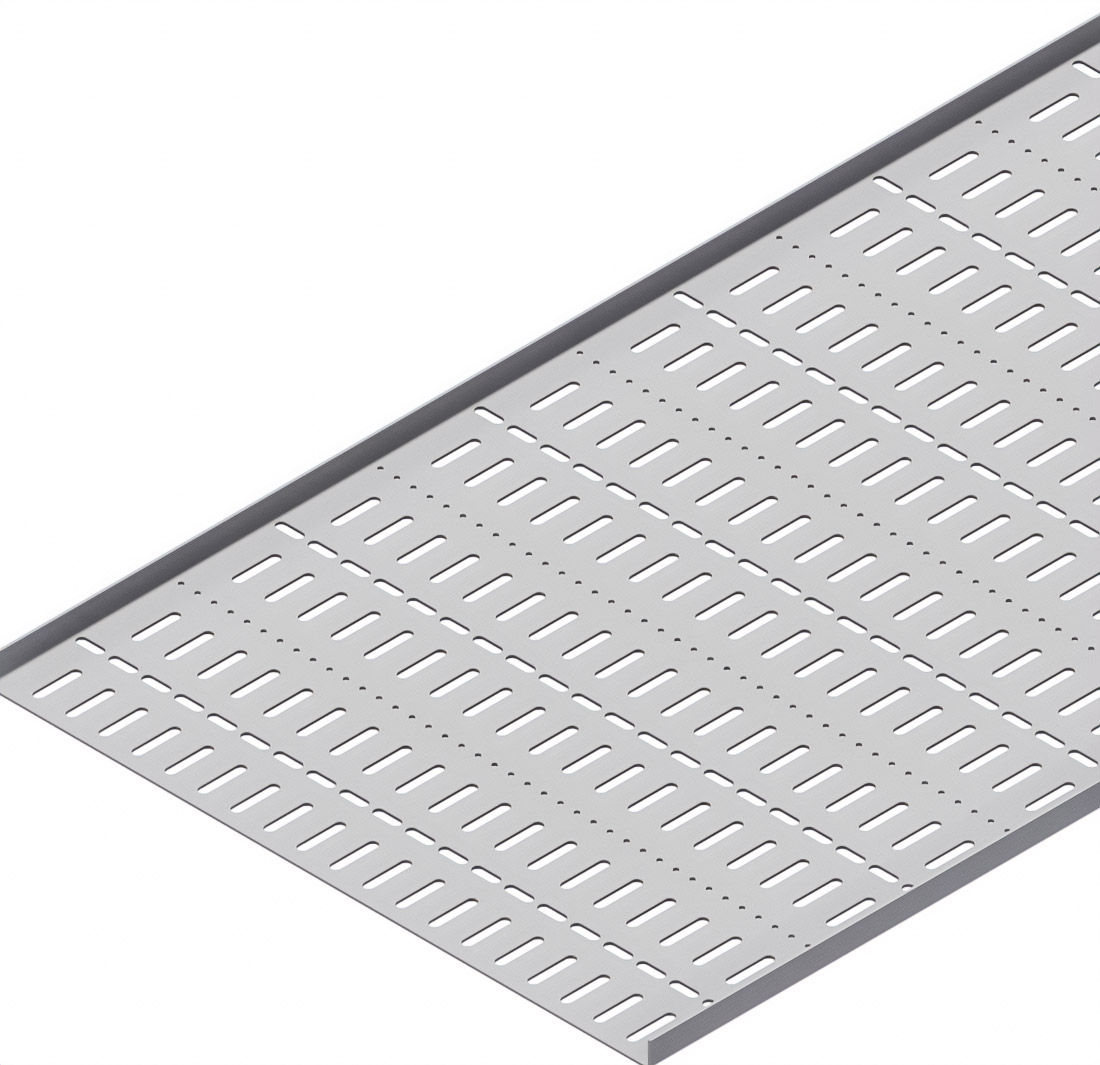
ISO 1461 describes the requirements for hot-dip galvanizing: thickness, uniformity, coating structure. ISO 9227 and ASTM B117 regulate salt mist testing at a temperature of 35 °C and a NaCl concentration of 5%. These tests last for hundreds or even thousands of hours, but they are more suitable for searching for defects, pores, cracks, weak points. They are not informative enough to compare the resistance of different materials, because real corrosion in the atmosphere includes cycles of humidification and drying, as well as the formation of a passive protective film.
Installation and Operation
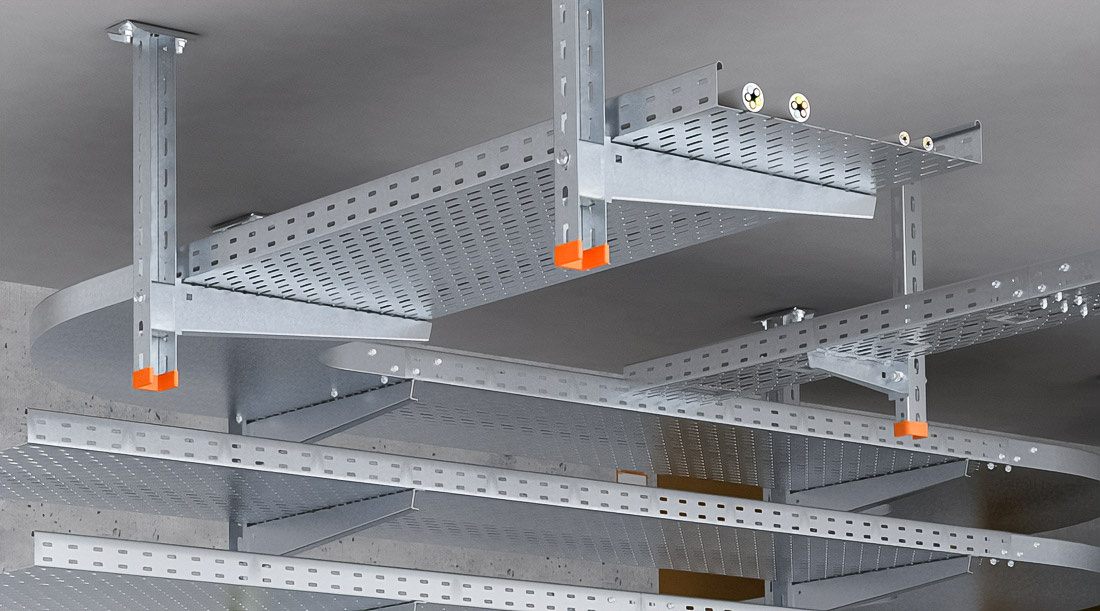
Even perfectly protected metal loses its properties when improperly installed. Supports should be installed every 1.5–2 meters, and for heavy trails the distance is reduced. Thermal expansion requires compensation every 25–30 meters. Ignoring this factor leads to deformations and cracks.
The fill factor is limited to 40–50%. Otherwise, the cables overheat, lose their insulation, and their throughput decreases. The bending radius of the power lines is 8–12 cable diameters, and even more for optical fiber. Protective grounding is required: couplings, connectors, copper jumpers, multimeter check. A continuous ground loop is a guarantee of disconnection in case of an accident.
Economics of Choice
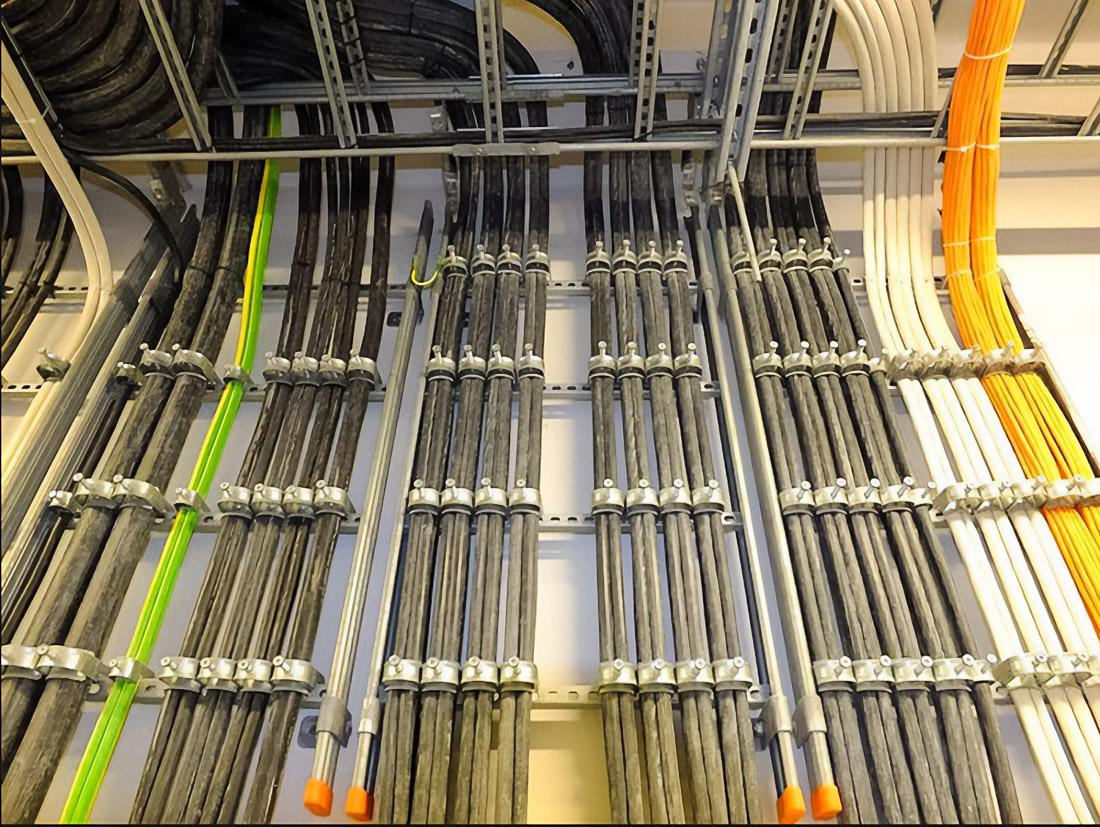
Pre-galvanizing is cheaper at the start, sometimes by 10–20%. But years later, this advantage disappears: replacements and repairs are more expensive. Hot-dip galvanizing justifies the investment in 10 years; it saves up to 30% of the maintenance budget. A prime example is the Dubai Marina project. There, the hot-dip galvanized trays remained operational for more than 12 years without a single replacement, withstanding constant exposure to salts and humidity.
In the harsh conditions of the UAE, there is no one-size-fits-all solution. But practice shows that HDG and SS316L stainless steel work most reliably in the coastal zone. Compliance with ISO 1461 and ISO 9227 standards, proper installation and control of the fill factor extend the service life of the tracks up to two decades. Every detail is important here: the thickness of the coating, the pitch of the supports, the bending radius, and even checking with a multimeter. The right choice depends not only on the cost of operation, but also on the safety of the entire system.

Skydiver, audiophil. Working at the junction of aesthetics and purpose to create strong, lasting and remarkable design. I’m fueled by craft beer, hip-hop and tortilla chips.